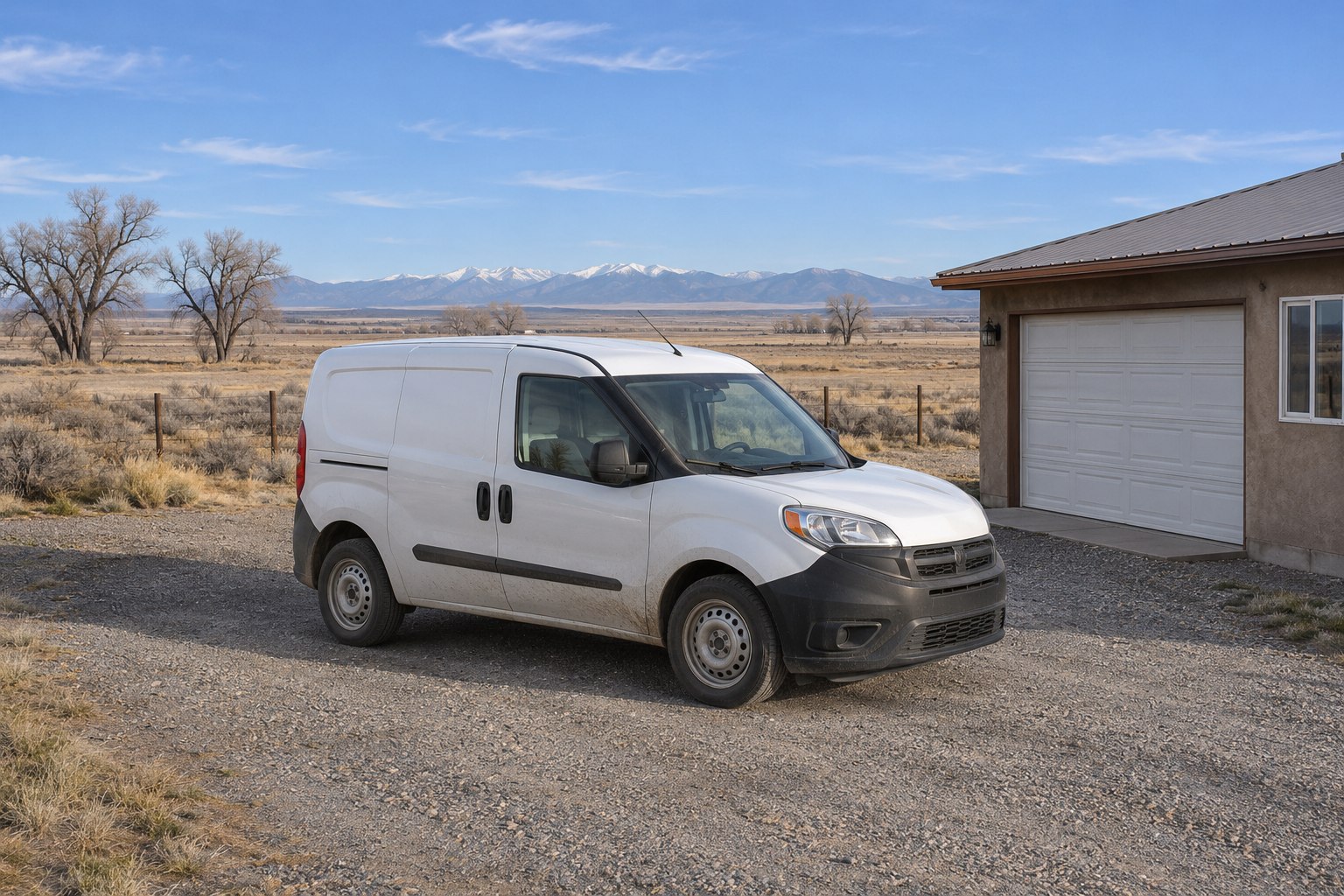
Illustrative garage-door service van beside a modest home on the San Luis Valley floor

Regional Repair and Diagnosis

Garage Door Repair Services in Alamosa and the San Luis Valley

Describe the problem and request a garage door repair quote.

Calls and quote requests welcome 24/7. Callbacks and on-site availability vary.

Get to the Cause of a Garage Door Problem

When a garage door stops opening, reverses unexpectedly, shakes, or begins making unfamiliar noises, the symptom does not always identify the failed component. A professional assessment may involve the door sections, rollers, hinges, tracks, counterbalance components, or opener. Alamosa Garage Door Repair accepts requests for general garage door repair in Alamosa and the surrounding San Luis Valley.

Start with what you can safely observe. Is the door stuck open or closed? Does one side move differently? Has a panel been damaged? Did the problem begin after a loud snap? Do not force a door with a suspected spring, cable, or track failure. Describe the condition and complete property address so a service professional can consider the request.

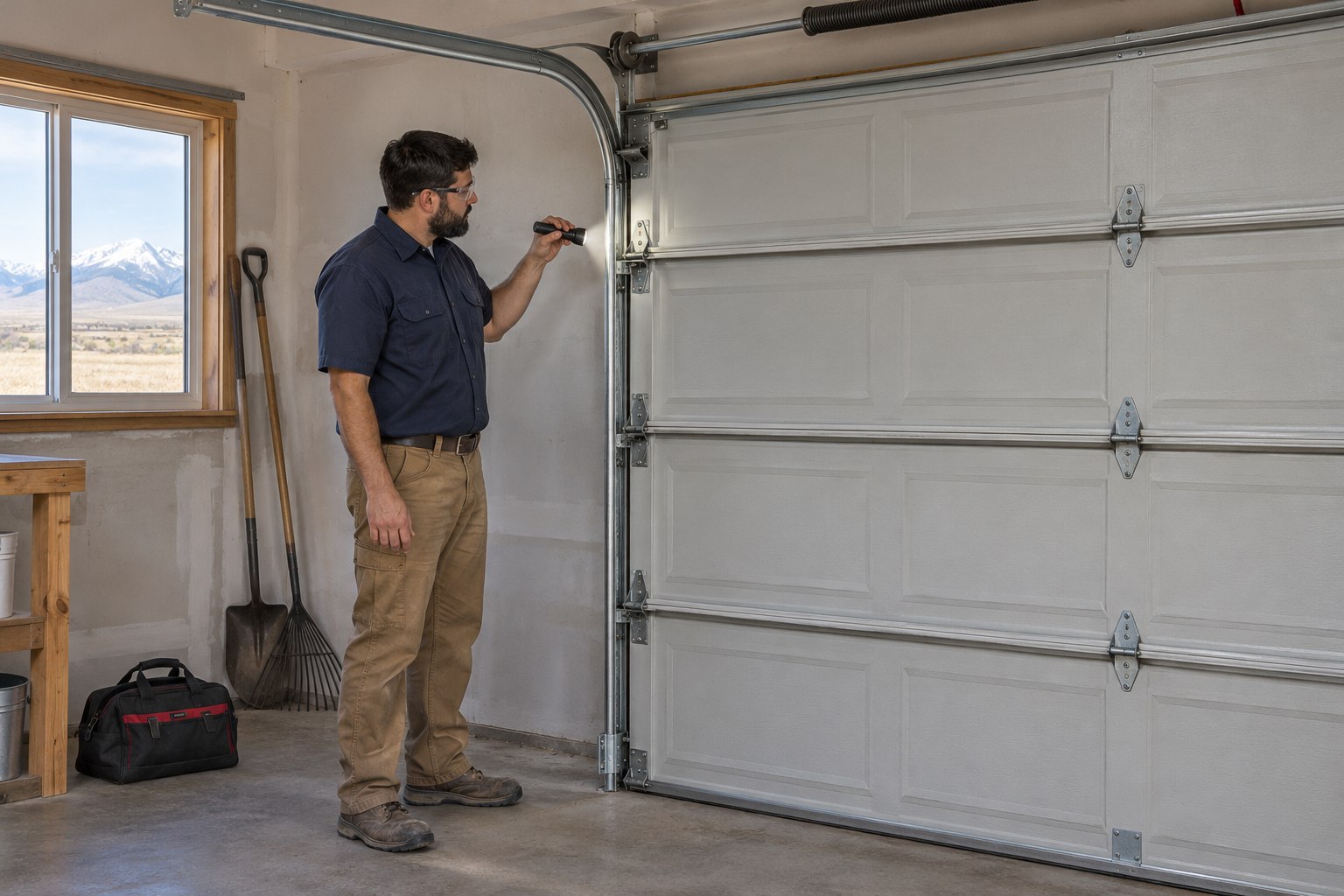
Illustrative technician inspecting the side track of a closed sectional garage door

Common Garage Door Problems and Repair Scope

General repair begins with identifying the actual cause. Similar symptoms may require different parts, so a repair scope should follow an appropriate assessment rather than an assumed diagnosis.

Doors That Will Not Open or Close

A door that refuses to move can have a mechanical obstruction, alignment problem, counterbalance failure, control issue, or opener fault. Describe whether the motor operates and how far the door moves. Do not keep cycling the opener against resistance.

A provider may need to inspect the door and opener together before recommending work. If the door is stuck open, explain the security concern and current position without trying to force it closed.

Noisy or Uneven Operation

Grinding, squealing, rattling, jerking, and uneven movement can indicate wear or damage involving rollers, hinges, tracks, or other hardware. The correct repair depends on identifying the noise source and checking the assembly's condition.

Avoid making tension adjustments or handling damaged hardware yourself. Include when the noise occurs and whether it appeared suddenly or developed over time.

Damaged Panels and Door Sections

A dented or bent section may be cosmetic, or it may interfere with normal movement and alignment. The door's material, construction, and availability of matching sections influence whether sectional repair is practical.

A provider can compare section replacement with a complete door replacement where appropriate. Share the approximate door dimensions and describe the location of the damage.

Rollers, Hinges, and Track Hardware

Worn rollers, loose hardware, or damaged tracks can affect how the door travels. Some issues are isolated, while others are symptoms of a larger alignment or balance problem.

A proper quote should identify the specific hardware involved and whether additional components require attention. Do not attempt to straighten a loaded or unstable door assembly.

Repair Diagnosis Before Parts Replacement

Replacing a part without checking the cause of the failure can leave an underlying problem unresolved. Diagnosis may involve the condition of the door, counterbalance system, track alignment, opener behavior, and safety functions.

Ask for an explanation of the proposed work, compatible parts, testing, and any findings that would change the estimate. A clear scope helps you compare options.
What Affects a General Garage Door Repair Quote?

No fixed price is represented here. Independent providers determine their own estimates and service terms. Ask whether the quote includes assessment, parts, labor, travel, and final testing.

How to Request Garage Door Repair

Describe the symptoms

Explain the door's position, movement, noises, visible damage, and whether the opener responds.

Provide property details

Include the complete address, approximate door size, garage type, and safe access information.

Check potential provider availability

Your request may be shared with an independent garage-door provider to explore coverage and scheduling.

Review the proposed repair

Ask about the diagnosis, parts, labor, charges, testing, and any alternatives before authorizing work.

Questions About Garage Door Repair

Why does my garage door move a few inches and then stop?

The cause may involve the opener, resistance in the door's movement, or a counterbalance or hardware problem. Repeated attempts can make some failures worse. Stop operating a damaged door and request an assessment.

Can a bent garage door panel be repaired without replacing the door?

That depends on the severity of the damage, door construction, and whether a compatible replacement section is available. A provider can assess whether a section repair is practical or a complete replacement makes more sense.

What does a general garage door repair assessment cover?

The scope depends on the reported problem and the provider. It may include the door's movement, tracks, rollers, hinges, counterbalance components, opener operation, and related safety functions.

Should I keep using a garage door that shakes while moving?

Unusual shaking can indicate damage or movement problems and should not be ignored. Avoid operating the door if it is crooked, binding, or visibly damaged. Request professional evaluation before further use.

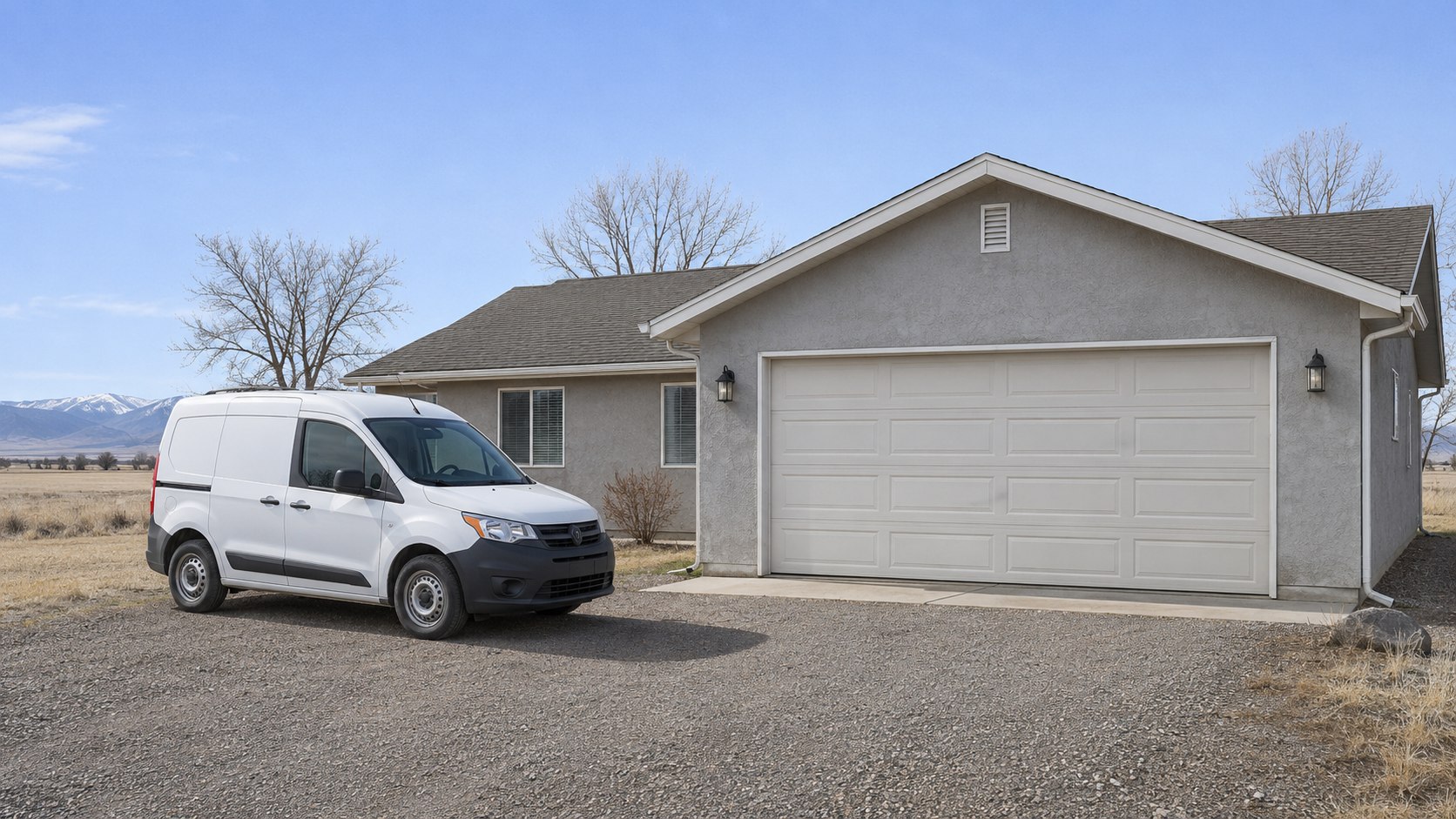
Illustrative white service van on a rural Valley driveway with distant Sangre de Cristo mountains

Tell Us About Your Garage Door

Calls and quote requests welcome 24/7. Callbacks and on-site availability vary.